
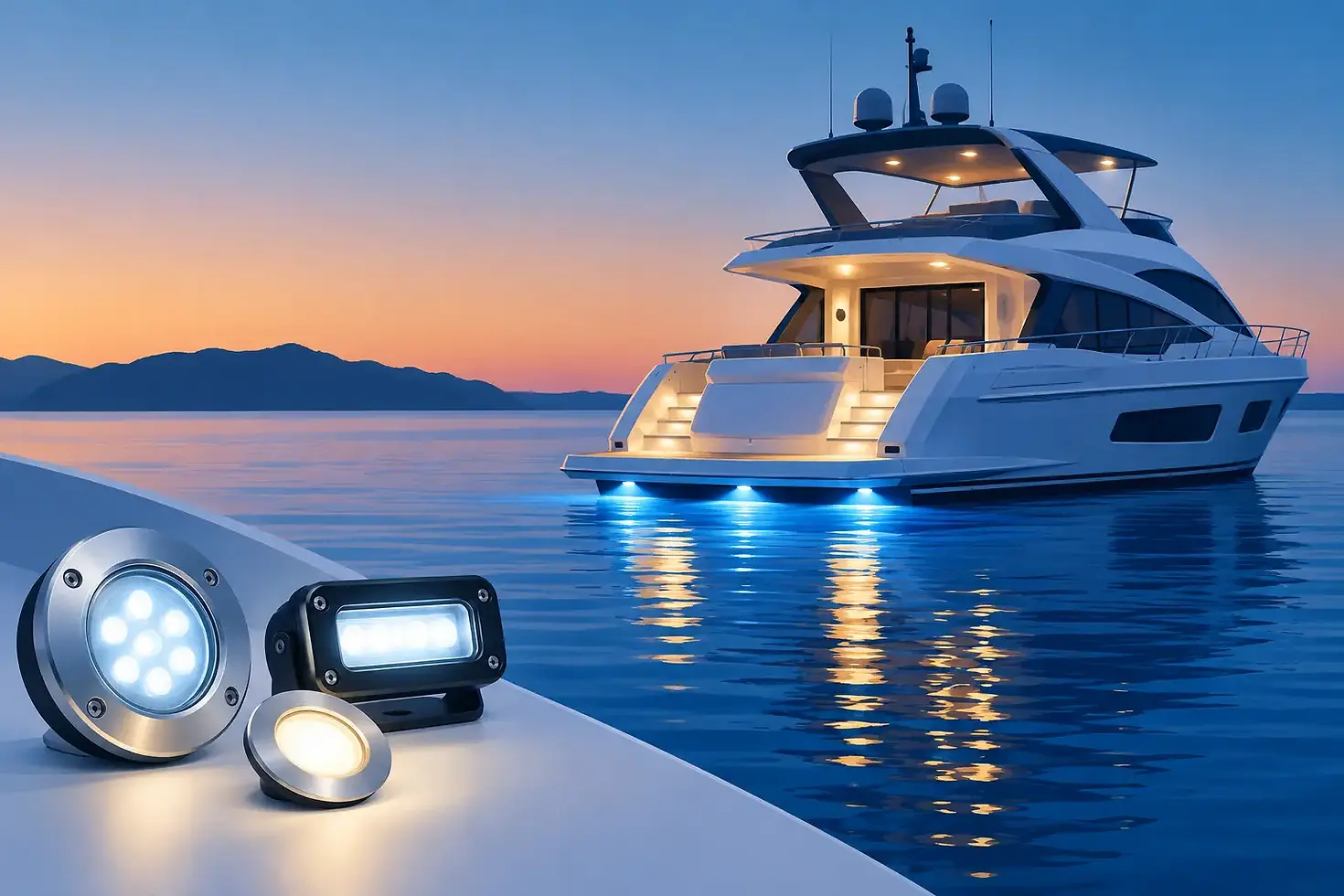
Marine Lighting That Looks Right and Lasts
A yacht name can look exceptional in the showroom and disappear completely at dusk if the marine lighting behind it was treated as an afterthought. The difference is rarely just brightness. It is the quality of the light, the way it falls across the hull, the material supporting it, and whether the complete assembly was designed for years of spray, vibration, heat, and washdowns.
For boat owners, captains, and refit teams, illuminated lettering is both a design decision and a marine equipment decision. It has to present the vessel at her best when she arrives at the dock after dark, while holding up when the weather is less accommodating.
Marine Lighting Is Part of the Vessel's Identity
A well-executed backlit yacht name has presence without looking theatrical. During the day, the letterforms, finish, and dimensional depth should complement the vessel's lines. At night, the illumination should create a clean halo that makes the name readable and refined rather than harsh or uneven.
This is why generic LED strips and surface-mounted fixtures often disappoint on a premium vessel. They may provide light, but they do not necessarily create a controlled visual result. Individual LEDs can show through as hot spots. Adhesives can age poorly. Wiring may be difficult to service. A sign that looks acceptable from a few feet away may reveal uneven spacing, glare, or visible hardware from across the marina.
Custom marine signage approaches lighting as part of the fabrication from the start. Typography, letter depth, mounting method, LED placement, wire exits, and backlighting color should all be resolved together. The result is not simply a name with lights behind it. It is a finished component that belongs on the boat.
What Makes Marine Lighting Different
Marine environments are unforgiving because several stresses arrive at once. Salt exposure accelerates corrosion. UV attacks finishes and plastics. Vibration works connections loose. Temperature changes cause expansion and contraction. Freshwater boats face less salt, but they still contend with sun, moisture, dockside impacts, and seasonal storage.
That is why material selection matters as much as the LEDs themselves. For exterior illuminated lettering, 316L stainless steel is a strong choice because it offers superior corrosion resistance for demanding marine applications. It also delivers the crisp, substantial appearance owners expect from a custom yacht sign. The finish can be polished, brushed, painted, or tailored to the vessel's existing metalwork and color palette.
The lighting components need the same level of scrutiny. Marine-grade LED systems should be selected for stable output, efficient operation, and long service life. A low-quality LED may be inexpensive at installation, but replacement becomes costly when access requires removing letters or working from a tender, swim platform, or staging.
There is a practical trade-off here. Brighter is not always better. Excessive output can bloom against a glossy hull, spill into nearby cabins, or create distracting reflections on the water. The right output depends on letter size, mounting height, hull color, ambient marina lighting, and the desired visual effect.
Color Temperature Sets the Mood
White light is not one color. Warm white creates a softer, more traditional glow that works beautifully with classic yachts, warmer paint tones, and teak-rich designs. Cool white reads cleaner and more contemporary, particularly on modern sportfish, express cruisers, and superyachts with crisp white or metallic finishes.
Blue is a familiar choice for transom names and can look striking at night, but it should be chosen with restraint. It changes the character of the vessel and may reduce readability depending on the hull finish and surrounding light. RGB systems offer flexibility, yet they introduce more components and controls. For owners who want a timeless result, a fixed, carefully chosen white often remains the most elegant answer.
Start With the Sign, Not the Light
The most successful illuminated names begin with a design conversation. A vessel name may already have meaning, a family history, a logo, or a recognizable type style behind it. Those details should inform the sign rather than be forced into a standard template.
Letter spacing is especially important. On a screen, tightly spaced letters can look dramatic. On a transom, they may create dark gaps, muddy illumination, or installation challenges. Fine script fonts can be beautiful, but overly thin strokes may not leave enough room for the structure and lighting needed outdoors. A skilled fabrication team can preserve the personality of a name while adapting it for real-world scale and visibility.
Before fabrication, production artwork and dimensional drawings remove uncertainty. They confirm the overall footprint, individual letter placement, wire locations, mounting points, and visual balance on the transom or cabin side. This stage is where a custom project becomes installation-ready rather than a costly experiment at the dock.
At Nauticalite, that process is built around the way boat owners and marine professionals actually work: provide a name, logo, reference image, or drawing, review the artwork, and approve a clear fabrication plan before the sign is made.
Placement Changes the Result
A transom name is the most familiar application for backlit lettering, but it is not the only one. Marine lighting can support vessel names on a hardtop, pilothouse, hull side, tender, or interior bulkhead. Each location brings a different set of decisions.
On a transom, the goal is often broad, even visibility from the dock or from astern. The sign must account for curves in the hull, access behind the mounting surface, and possible interference from ladders, doors, rails, or tender chocks. A slight curve can affect both the visual alignment of the letters and the way the halo appears around them.
On a cabin side, sunlight and viewing angles become more influential. A polished letter may look spectacular in direct light but create glare from certain perspectives. On an interior bulkhead, the marine exposure is lower, but the lighting needs to feel comfortable in a space where guests spend time. The best solution changes with the location.
Plan Wiring Before the Boat Is Closed Up
The cleanest installation is usually the one planned early. Ideally, wire paths, power access, switching, and penetrations are considered during a build or refit, before interior panels are finished and access becomes limited. That said, a well-designed custom sign can also be successfully installed on an existing vessel with thoughtful preparation.
Wire exits should be positioned to minimize visible cabling and reduce unnecessary penetrations. Every penetration through the vessel must be properly sealed to protect the structure and prevent water intrusion. Connections should be secure, protected, and accessible enough for future service. If a sign is installed on a removable panel, consider how that panel will be removed without straining the wiring.
Voltage compatibility should be confirmed before ordering. Many vessels operate on 12V or 24V DC systems, while some installations may require a dedicated driver or conversion approach. This is not an area for assumptions. A short confirmation during the design stage prevents delays when the sign arrives.
Details That Separate a Finished Look From a Retrofit
Premium marine lighting is often recognized through small details. The halo around each letter is consistent. There are no obvious pinpoints of light. The letters sit evenly against the mounting surface. Hardware is concealed or deliberately specified. The sign looks equally considered in daylight and darkness.
Finish selection matters here. Mirror-polished stainless steel offers a high-luxury look and reflects the water, sky, and surrounding marina. Brushed stainless can feel more understated and may better suit workboats, expedition yachts, or contemporary designs. Painted or powder-coated faces can tie the name directly to the vessel's accent color, though the coating system must be appropriate for exterior marine use.
Do not overlook scale. A name that is too small can feel tentative on a large transom. One that is too large can crowd the boat's architecture or conflict with existing equipment. Dimensional drawings allow owners and installers to evaluate proportion before metal is cut, which is far preferable to judging it after the sign is mounted.
Choose for Serviceability, Not Just Launch Day
Every exterior component eventually needs inspection, cleaning, or service. A good marine lighting design accepts that reality. It uses materials that can be cleaned without special rituals, components selected for the environment, and mounting methods that support a professional installation.
Regular care is straightforward. Rinse salt residue when washing the vessel, use non-abrasive products suitable for the finish, and avoid aggressive compounds around seals, lenses, or painted faces. If illumination changes, address it early. A dim section or intermittent connection is easier to correct before it becomes a larger wiring issue.
The goal is not merely to make a vessel name visible after sunset. It is to create a detail that carries the same standard as the boat itself: purposeful, durable, and unmistakably yours. When the design, materials, and installation are handled with equal care, the light does more than announce a name. It gives the vessel a presence that holds up long after the first night at the dock.


Comments